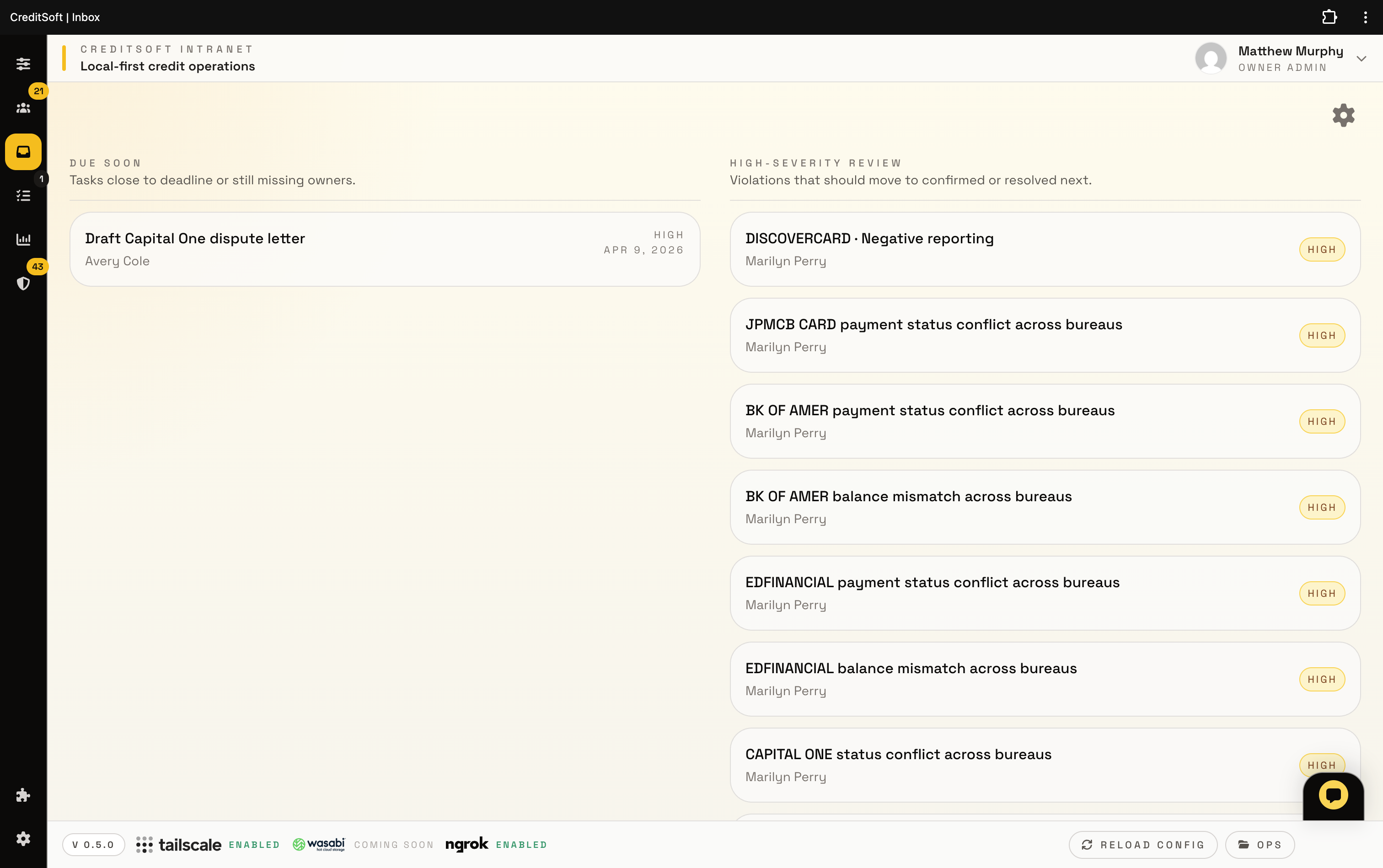
AI-driven detection for Metro2 violations — identifying account mismatches, inaccurate late payments, invalid collections, and bureau-level reporting conflicts with precision.
Metro2 is the data reporting format used by all major credit bureaus (Equifax, Experian, TransUnion). CreditSoft uses AI-driven review to surface violation patterns, account mismatches, inaccurate late payments, invalid collections, duplicate accounts, and balance or status conflicts so your team can review the facts before drafting.
If you want a consumer-facing intake before the consultation, use our FCRA / FDCPA issue check to screen for account mismatches, invalid collection claims, inaccurate late-payment history, and reinsertion-style reporting behavior before the file reaches your review queue.
AI-driven review flags account-number mismatches that do not line up with the consumer's records or bureau trail.
Balance conflicts are surfaced when reported amounts fall outside expected tolerances or supporting records.
Invalid collection signals are reviewed against payment, settlement, validation, and ownership history.
Date-opened conflicts are identified when the reported timeline is inaccurate, missing, or inconsistent.
Future-dated reporting is treated as a high-priority Metro2 warning signal for factual review.
Identity mismatches flag SSN, name, address, or ownership details that do not match the consumer.
Manual-entry signals help identify wrongly keyed account, payment, date, or identity information.
Inaccurate late-payment history is flagged when the timeline does not match statements or other records.
Employment mismatches are surfaced when bureau records conflict with the consumer's actual profile.
Payment-history conflicts are identified across statements, bureau data, and supporting records.
Reaging signals flag accounts where dates or delinquency history may have been moved without support.
Status conflicts surface when an account's reported state does not match the broader bureau or statement trail.
Term and expiration issues are covered when loan terms, dates, or payment windows are incorrectly reported.
Unverified reporting is flagged when the information cannot be supported by the available record trail.
Duplicate-account detection identifies repeated tradelines and overlapping collection records with precision.
Zero-balance conflicts are covered when a paid or closed account still reports an active balance.
Statement filed but not showing.
Account opened fraudulently.
Bankruptcy discharged but still showing.
Credit limit higher than valid amount.
Payment doesn't match statement.
Address different from bureau records.
Delinquency previously reported in error.
Judgment vacated or paid but still showing.
Revolving reported as installment (wrong type).
Wrong consumer designation on account.
Wrong vehicle type on auto loan.
Mortgage terms incorrectly reported.
Original loan amount incorrect.
Account shows balance after being paid.